
MySQL 8.0 has been known for its innovative pace, introducing new breaking changes in minor releases within the 8.0 series, which has been a great debate among the MySQL community and a long ask to have a more stable release cadence within the same minor series. Oracle has listened to MySQL users and has announced a new release model, where it introduces the concept of LTS releases and Innovate releases. On the 30th of April, the first Long Term Support release was announced. This release rece

Marcelo Altmann
2024-05-09 · 2 min read
MySQL 8.0 has been known for its innovative pace, introducing new breaking changes in minor releases within the 8.0 series, which has been a great debate among the MySQL community and a long ask to have a more stable release cadence within the same minor series.
Oracle has listened to MySQL users and has announced a new release model, where it introduces the concept of LTS releases and Innovate releases.
On the 30th of April, the first Long Term Support release was announced. This release received the version number of 8.4. Let’s have a look at what is new in comparison to the previous 8.0.
Here is a list of the most notable changes in the release:
mysql_native_password has been disabled by default. The new default is caching_sha2_password.SHOW MASTER STATUS and also STATUS variables like Com_change_master for exmple.AUTO_INCREMENT modifier used with FLOAT or DOUBLE was deprecated in 8.0 and now removed in 8.4. Attempting to create a new table using this combination now results in an error.AUTO UPDATE option. Updates automatically happen when ANALYZE TABLE statements is used.FLUSH PRIVILEGES statement and for OPTIMIZE LOCAL TABLE (NO_WRITE_TO_BINLOG).--output-as-version was added. This allow users to take logical backups from previous versions using the options BEFORE_8_2_0 (for 8.0.23 until 8.2), BEFORE_8_0_23 or SERVER(uses the latest version).FLUSH HOSTS statement has been removed. Users need to execute a direct TRUNCATE TABLE performance_schema.host_cache instead.Oracle MySQL has presented a variety of changes but nothing substantial. Most of the changes are housekeeping and removal from previous versions. One of the substantial improvements is around GTID Tags. Also, the new release model with 3 Innovate releases before the LTS, allowing users to preview and test new functionality before they are incorporated into an LTS release.
Readyset is a drop-in performance layer that integrates with your existing MySQL infrastructure without requiring changes to your application code. This makes it ideal when you're already experiencing the stress of updating your database.
If you're still on legacy MySQL 5.7 or below, or if you need to upgrade from 8.0, partner with Readyset and get a fully-managed version of Readyset Cloud in production.
Related articles
Continue reading more about mysql.
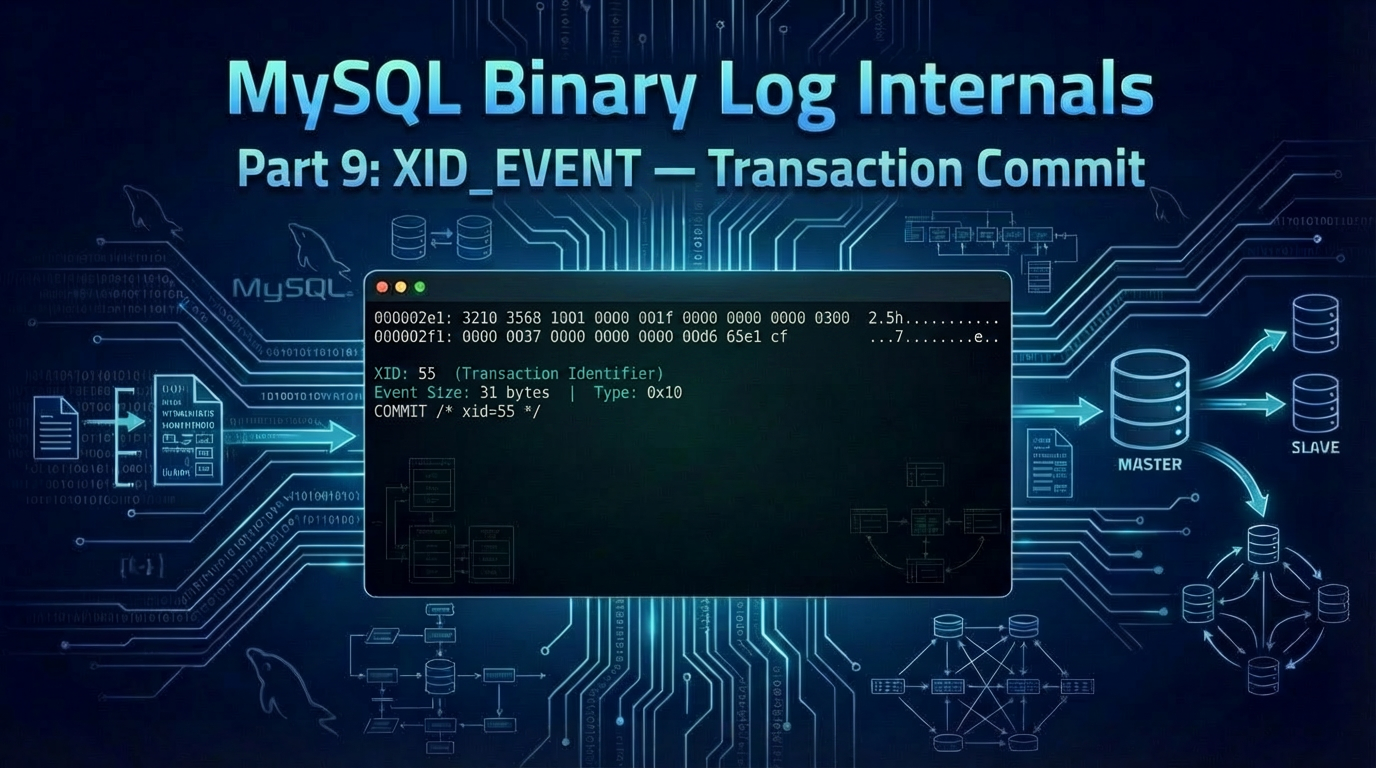
In this ninth post of our series, we decode the XID_EVENT — the smallest event in the binary log, and the one that marks every transactional commit. Introduction Every DML transaction we've decoded so far ends the same way: with an XID_EVENT (event type 16, 0x10). At only 31 bytes on the wire, it carries a single piece of information — an 8-byte transaction identifier — but it does some of the heaviest lifting in MySQL replication. The XID_EVENT is what allows replication to be crash-safe wit
Marcelo Altmann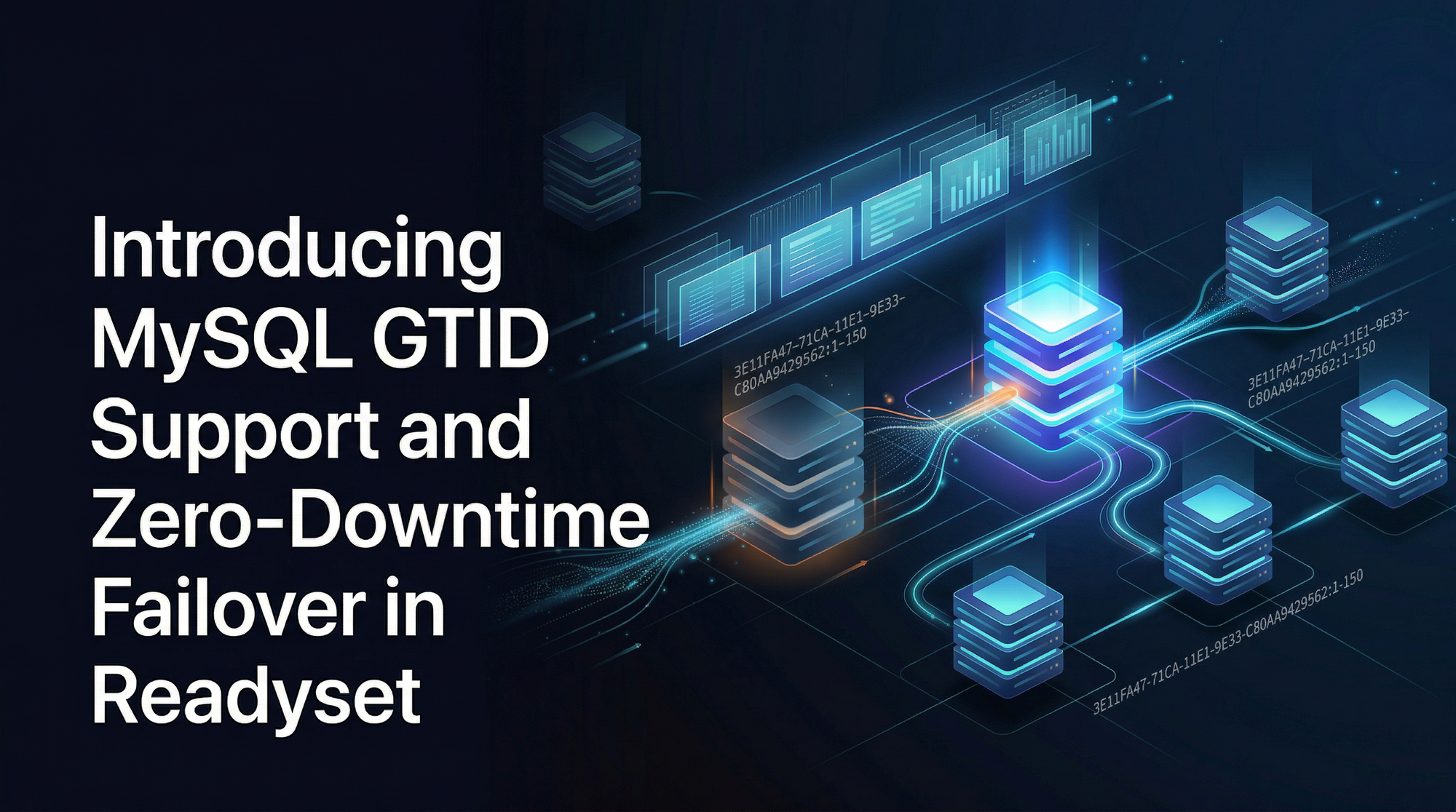
One of the most requested features since Readyset first supported MySQL has been GTID-based replication. With the latest release, Readyset now fully supports MySQL Global Transaction Identifiers (GTIDs), and with it, a capability that changes how you think about cache durability: zero-downtime failover. This post covers what GTID support means for Readyset users, how failover works in practice, and why this matters for anyone running Readyset in production. The Problem with Binlog File and Po
Marcelo Altmann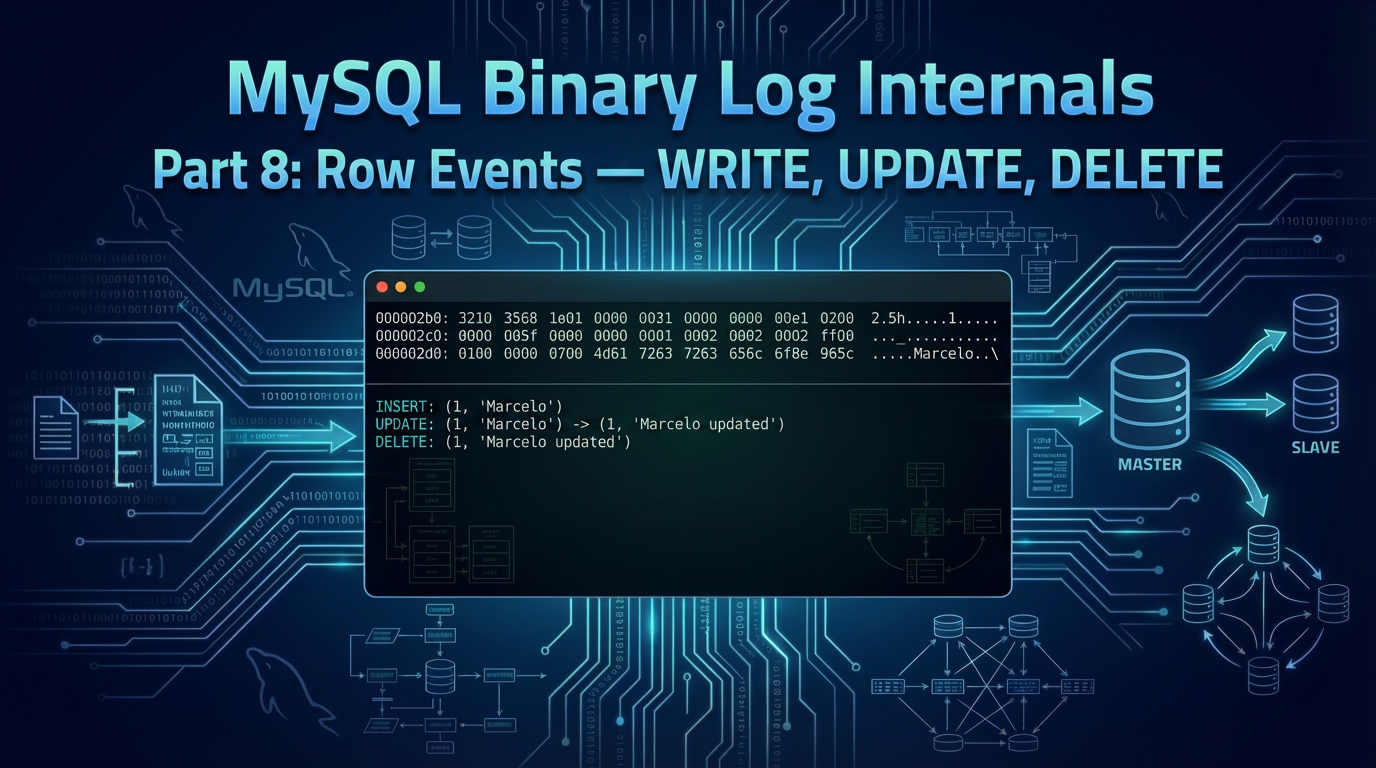
In this eighth post of our series, we decode the three row events — WRITE_ROWS_EVENT, UPDATE_ROWS_EVENT, and DELETE_ROWS_EVENT — that carry the actual row data for INSERT, UPDATE, and DELETE operations in row-based replication. Introduction In the previous posts, we decoded the events that set the stage for row-based replication: the GTID_LOG_EVENT identifies the transaction, the QUERY_EVENT opens it with BEGIN, and the TABLE_MAP_EVENT describes the table's schema. Now we finally arrive at th
Marcelo AltmannModern applications demand instant performance, even under unpredictable load. Readyset helps you eliminate slow queries, stabilize latency, and scale confidently.
Revolutionize your database performance with Readyset
Serve requests at sub-millisecond latencies with the modern database scaling and query caching system for MySQL and PostgreSQL.
Join our newsletter
Stay updated with the latest news, insights, and developments from Readyset — straight to your inbox.