It Might Be Time to Rethink How You Scale MySQL for Peak Demand As Black Friday and Cyber Monday approach, many engineering teams prepare for their annual database performance stress test. The surging traffic, unpredictable spikes, and sleepless nights spent watching database dashboards. The typical response is familiar: add more replicas, increase compute resources, and pray everything holds. But this approach to database scaling is reactive, costly, and fragile. What begins as a quick fix be

Tanmay Sinha
2025-10-21 · 4 min read
As Black Friday and Cyber Monday approach, many engineering teams prepare for their annual database performance stress test. The surging traffic, unpredictable spikes, and sleepless nights spent watching database dashboards. The typical response is familiar: add more replicas, increase compute resources, and pray everything holds.
But this approach to database scaling is reactive, costly, and fragile. What begins as a quick fix becomes an ongoing cycle of replication, tuning, and troubleshooting. Despite scaling infrastructure, query performance degradation still appears once data volumes reach a certain threshold. The result is higher cloud bills, slower queries, and more operational risk precisely when your business can least afford it.
There’s a better way to scale MySQL, and it doesn’t involve duct tape or midnight interventions.
At a recent keynote at MySQL Conference in Sao Paulo, I spoke about how read replicas remain the most common method for scaling relational databases like MySQL. They work by offloading read queries from the primary database to secondary instances. In theory, this improves throughput. In practice, it often creates new bottlenecks and, worst of all, scales linearly.
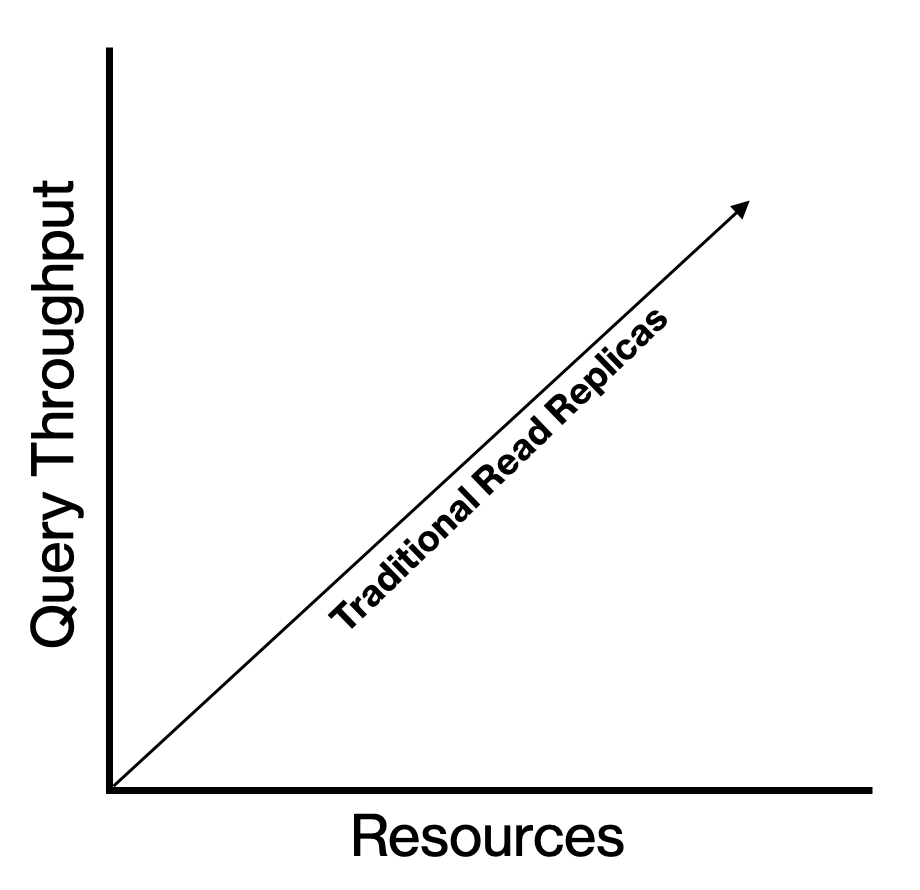
Each replica must still execute inefficient queries, meaning the same underlying performance issues persist across more machines. As replicas multiply, so do the challenges of maintaining schema consistency, handling failovers, and monitoring replication lag.
The operational burden grows faster than the performance gain. Teams end up managing a larger, more complex system with higher costs and lower reliability. A “replica-first” database scaling strategy might buy short-term headroom, but it rarely delivers long-term efficiency.
ClickFunnels, a leading marketing and lead-gen platform, faced precisely this challenge. Their Aurora MySQL databases handled ever-increasing read workloads as customer adoption surged. Despite multiple rounds of database optimization and MySQL scaling, latency continued to rise and throughput plateaued.
When ClickFunnels implemented Readyset, they discovered a different path to scale. Instead of adding replicas, Readyset introduced an intelligent caching layer between their application and primary databases. Frequently accessed queries were cached automatically and served at sub-millisecond speed.
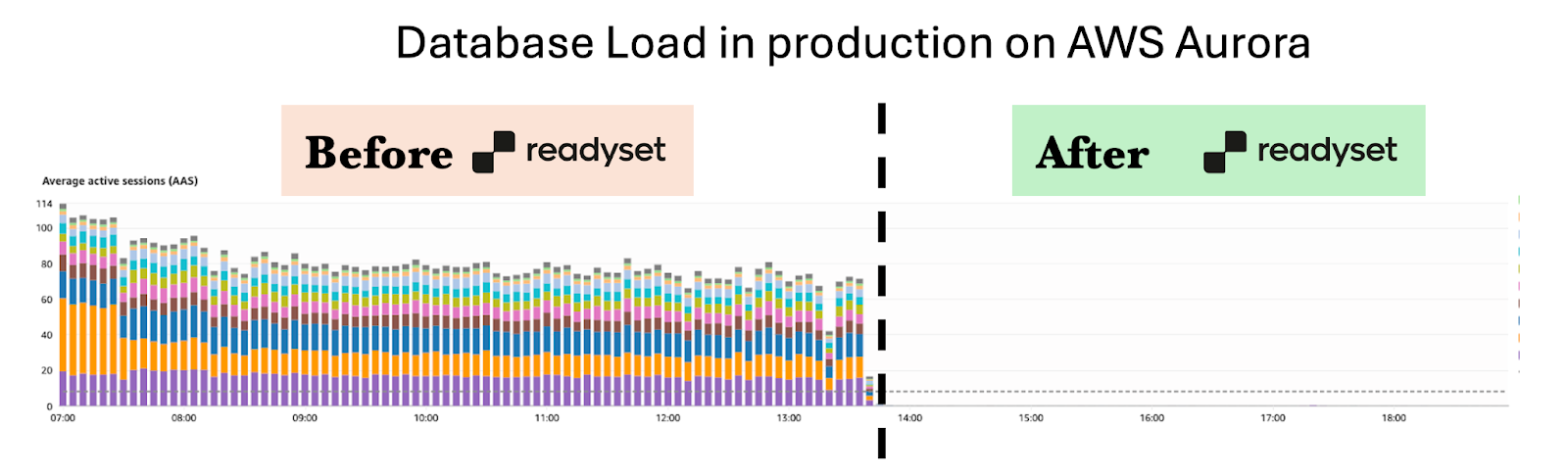
The impact was immediate as database load dropped sharply, replica usage declined, and end-user response times improved. Without modifying application code or rewriting queries, ClickFunnels achieved predictable, sustained database performance during peak usage.
Readyset QueryPilot builds on the same foundation that helped ClickFunnels achieve their results but adds a crucial component to the mix - automation. Available for MySQL scaling (with Postgres support coming soon), it brings intelligent database caching, automatic query routing, and workload optimization into a single, drop-in layer that is built to handle unpredictable workloads and scale seamlessly.
Key benefits include:
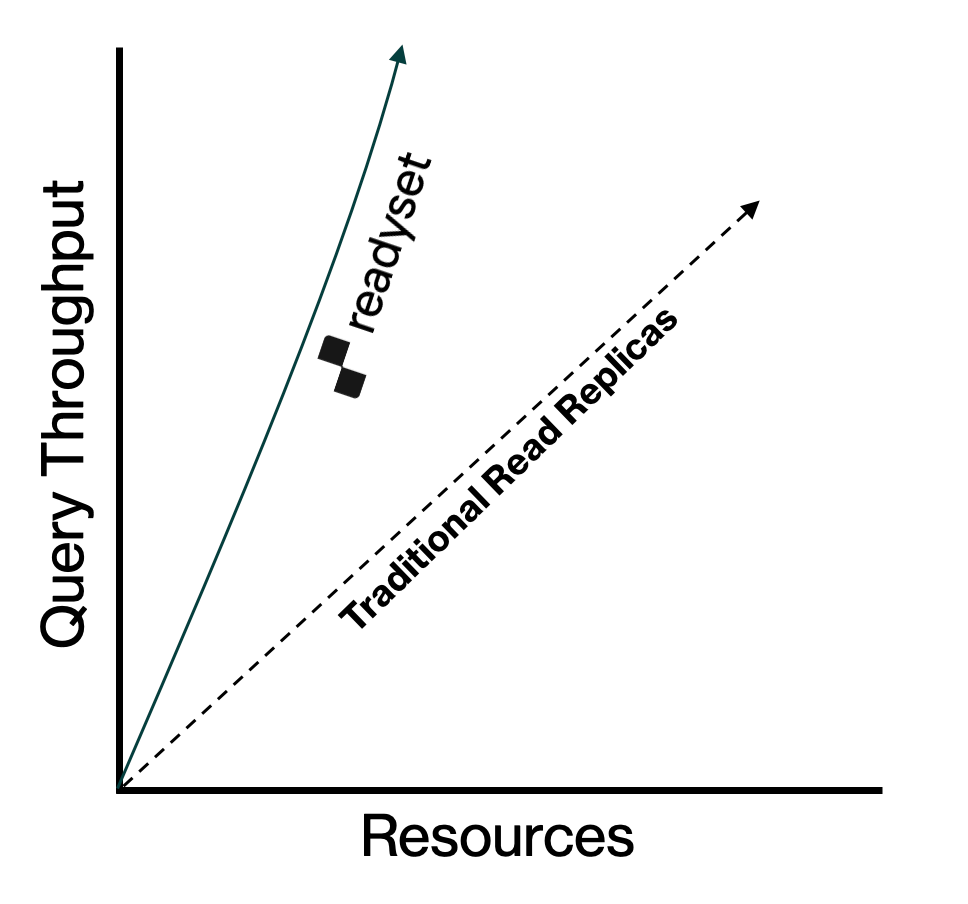
With QueryPilot, teams no longer have to choose between performance and simplicity. The system handles query optimization transparently, freeing developers to focus on features instead of firefighting.
The most effective database scaling strategies aren’t built on hardware expansion instead they’re built on architectural efficiency. QueryPilot eliminates the need for manual tuning cycles and costly over-provisioning by decoupling query performance from compute resources.
Instead of scaling reactively in response to traffic surges, teams can plan proactively, knowing that high-traffic queries are automatically cached and served efficiently. This reduces cloud expenditure, simplifies database operations, and improves overall system stability.
For growing SaaS businesses, this shift is transformative. It means predictable performance under unpredictable loads and the ability to maintain consistency and speed as data scales.
Black Friday doesn’t have to mean anxiety, sleepless nights, and last-minute database scaling emergencies. With the right database performance strategy, your team can approach high-traffic periods with confidence knowing the infrastructure will handle the load without manual intervention.
Readyset QueryPilot helps MySQL users move beyond the limitations of read replicas by offering a scalable, intelligent database caching solution designed for modern workloads. It delivers measurable improvements in query latency, cost efficiency, and operational simplicity allowing teams to focus on what matters most: building great experiences for their customers.
This Black Friday, the question isn’t how much more hardware you can add. It’s whether your MySQL scaling strategy is truly ready for the future.
You can take QueryPilot for a spin here and see how it can help you seamlessly scale without any code changes. Reach out to us if you have any questions - hello@readyset.io.
Note: ChatGPT was used to proofread this post for correctness, grammar and formatting.
Modern applications demand instant performance, even under unpredictable load. Readyset helps you eliminate slow queries, stabilize latency, and scale confidently.
Revolutionize your database performance with Readyset
Serve requests at sub-millisecond latencies with the modern database scaling and query caching system for MySQL and PostgreSQL.
Join our newsletter
Stay updated with the latest news, insights, and developments from Readyset — straight to your inbox.